
on the insect apocalypse
and the damage it is causing

Several years ago, I got invited to a conference held in a school campsite, nestled by a river in steep forested hills, somewhere between Napier and Taupo in the North Island of New Zealand. It was a fun conference, and I first met a very good friend of mine there.
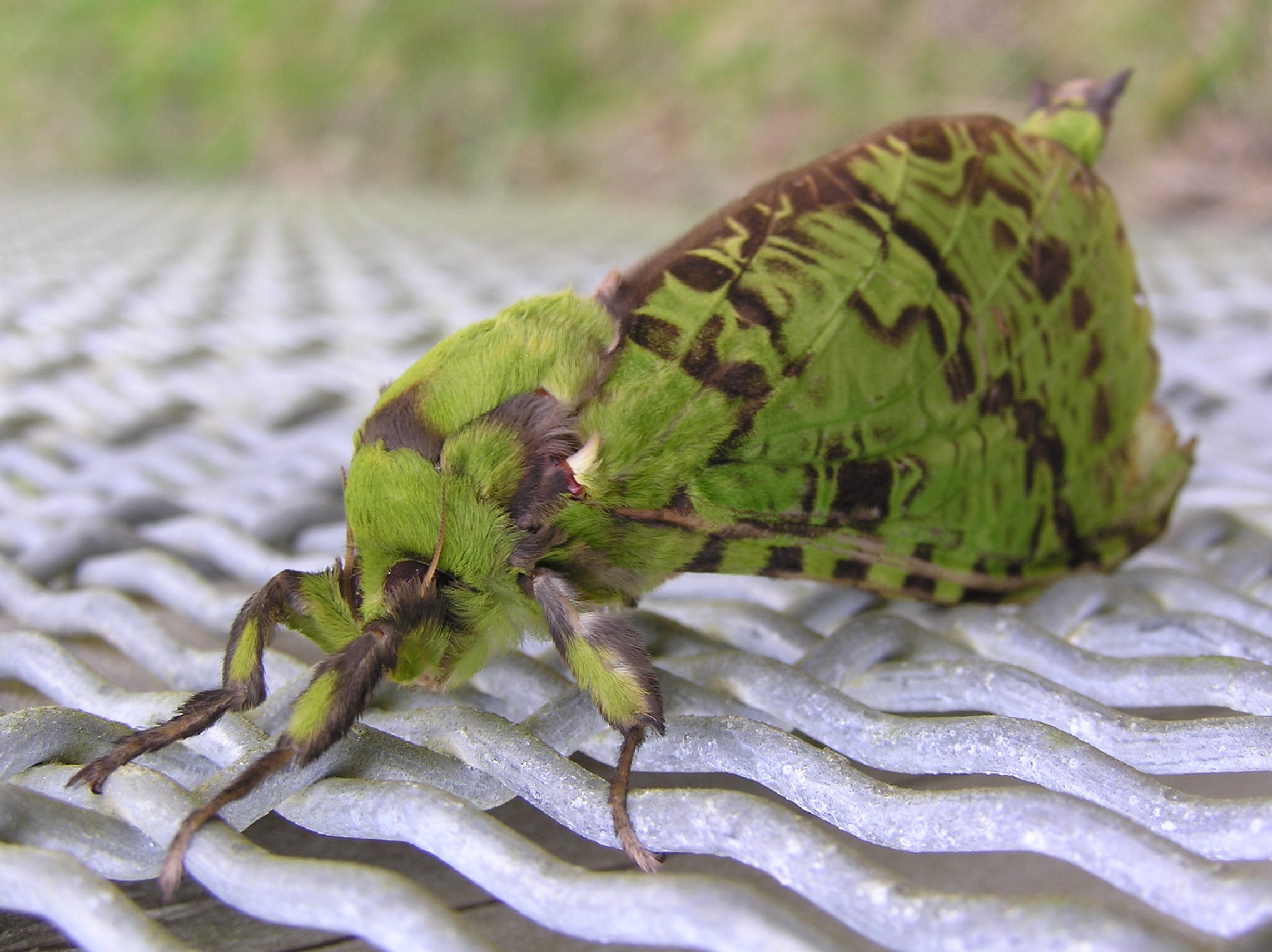
Apart from the science and the amazing location, I have one abiding memory. The moths. There were a lot of moths. Actually, that is an understatement; there were a metric shit-tonne of months. At night, there were three lights on poles left on to guide people from the dining area, where we relaxed talking rubbish, to our fairly rudimentary cabins. When darkness fell, and it fell pretty damned hard, these lights were haloed by vast quantities of moths. They swirled and danced, bashed their heads into the lights, and clustered around us if we turned on a torch or the light at our cabins. The air was thick with moths, like dusty winged snowflakes in an Otago snowstorm
.One night, a Ruru (Morepork), a small New Zealand owl, sat on the cowl over one of the lights, snapping and eating the abundance of moths that the light had attracted. It was an all-you-can-eat moth buffet for the owl, the quantity of moths being stuffed down its beak precluding its usual calls for more pig flesh.
Many people will have had the same experience, driving through a forest at night where there were so many moths it was hard to see in the headlights. Having to wash the windscreen of a car after driving cross-country because of the quantity of bugs smushed on it. Swerving across the road to avoid huge drifts of Monarch butterflies, as you trundle down the endless straight roads of Ontario in Canada.
But, dear Reader, has this happened to you recently? In the past few years, it has become clear that insect populations seem to be declining, and in some cases, precipitously.
The first warning came from Europe. The Krefeld Society, a group of entomologists from across Germany, had been monitoring nature reserves using Malaise traps, a sort of mesh tent that captures flying insects. This group have been measuring flying insect biomass in their traps since the 1980’s- and, between 1989 and 2014, they measured a 75% decline1. Yes, really, over 25 years, ¾ of the insect biomass went missing. So that’s fairly frightening, but worse than this, the same pattern is found in other places. Those Monarch butterflies you avoided in Ontario have declined 80% in 10 years2. In Colorado alpine meadows, insect biomass has declined 47% in the past 35 years, and abundance by 61.5%3. In tropical forests in Puerto Rico, insects caught in sticky traps declined 97-98% between 1977 and 20134. Hence, the insect apocalypse.
This frighteningly precipitous decline in insects raises several questions. The first is why? What is causing the decline?
That is a difficult question to answer, probably because there are multiple answers. Perhaps the most compelling is the rise in the use of insecticides. Many modern insecticides are broadly used, have broad effects, and last for long periods in the environment. The modern family of insecticides, Neonicotinoids, that replaced organophosphates (many of which are neurotoxic in people) and DDT (which is toxic and bioaccumulates), are still pretty bad news. They collect in groundwater, seep off pet flea treatments, and seem to be indestructible. They are broadly used in agriculture, and non-specific; they kill any insect, or arthropod, and even nematode. It would be little surprise that the use of these insecticides would correlate with insect decline, and in some cases they do5. Other explanations have been put forward, such as weather anomalies6, though this has been firmly rebutted7, and climate change more generally⁴. I suspect that we have a range of things to blame; populations are declining rapidly because of a mixture of climate change, insecticides, land-use change and extreme weather events.
What are the consequences of insect loss? Insects do a lot of things that we don’t notice. They carry out what are coyly referred to as “ecosystem services”, which include things like pollination, turning over soil, disposing of decomposing things, control of pests and diseases and more. The problem is , it’s hard to work out all the things that insects are essential for until there aren’t any insects.
Insects play important roles in pollination- obviously in natural environments, but also in human food production. 75% of the crops we eat require pollination, mostly by insects, 35% of crop production involves pollination, probably about 10% of this absolutely requires pollination. Not all of this pollination is carried out by bees, which are managed; much is carried out by passing insects, or very specialised species. Without insect pollination, we lose kiwifruit, melons, pumpkins, watermelon, chocolate, brazil nuts, vanilla, and quinces. These are just the crops that absolutely require pollination- lots of others will lose 40-90% of production without them. Looking at the effects of the insect decline, it correlates, in some places, with the loss or reduction of insect-pollinated plants8, so this effect is documented and measurable.
Insects also lie at the bottom of food webs. Loss of insects will also lead to loss of things that eat insects. If you care about birds, North American insectivorous birds declined more than any other bird group, around 40% between 1966 and 20139, and in other places, insect-relying bird numbers have collapsed10. Is this all due to insect loss? It’s very hard to say, but something is going on. You can’t have a 75% reduction in flying insects without a knock-on effect on the things that eat them.
The impact of insect loss is not clear, but not likely to be good. Perhaps a good guide would be Rachel Carson’s Silent Spring11, which predicted all of this based on the impact of DDT. The question some of my readers might be asking is: Is this happening in New Zealand? Well, my answer is a bad one. The problem is we have very few long-term monitoring projects- funding for such projects is impossible here. So we don’t know. I think I know how to generate this data using genomic approaches, but given the government has just indicated that it doesn’t want to fund environmental sciences, it seems unlikely that we will know. So we are sleepwalking into disaster. We don’t know, and we don’t have the resources we need to find out. Alongside this, ecosystem services fall into the tragedy of the commons. It’s vital for production, but no one owns it, so no one takes responsibility. The government could, but they have signalled they don’t want to.
Anecdotally, yes we have a problem. People talk about the moth storms they used to see, the piles of insects that built up on car radiators and windscreens, and how this doesn’t happen now. It is not clear whether insect-pollinated plants are affected in New Zealand, and insectivorous birds don’t seem to be declining in the latest garden bird surveys12- but this is in a background of increased emphasis on predator control. This is not trivial to research but I am very worried that we don’t have the data, we aren’t looking, and the impact if it is happening will be huge.
I am reminded of Douglas Adams’ invention of the SEP13
“An SEP,’ he said, ‘is something that we can’t see, or don’t see, or our brain doesn’t let us see, because we think that it’s somebody else’s problem. That’s what SEP means. Somebody Else’s Problem. The brain just edits it out, it’s like a blind spot. If you look at it directly you won’t see it unless you know precisely what it is. Your only hope is to catch it by surprise out of the corner of your eye.”
Douglas Adams, Life the Universe and Everything
We are all ignoring the problem with our insects because it is somebody else’s problem, and the consequences will be appalling.
One issue is that we tend to hate or be frightened of insects- how can we care about the loss of something we regularly kill in large numbers without qualms, that we ascribe to “yuck”, and that we spray poison to avoid? Just think of a field without the quiet chirping of crickets, a pond without the hawking of dragonflies, and a New Zealand Summer without the zing of cicadas. Insects are part of our world and our lives; we would be the poorer if we let them slip away.
The great haiku poet Matsuo Bashō uses a cricket in one of his most famous verses to evoke nostalgia and melancholy, a metaphor for lost battles and past days. The onomatopoeic word ‘kirigirisu’ (cricket) brings us the insect and its voice in one, evoking these feelings. Let’s not let insects fly out of the world, leaving them only as memories of their lost voices.
How piteous!
Beneath the warrior’s helmet
A cricket cries.

むざんや   な甲の下の   きりぎりす
muzan ya na/ kabuto no shita no/ kirigirisu

Matsuo Bashō 1689
Hallmann, C.A., Sorg, M., Jongejans, E., Siepel, H., Hofland, N., Schwan, H., Stenmans, W., Müller, A., Sumser, H., Hörren, T. and Goulson, D., 2017. More than 75 percent decline over 27 years in total flying insect biomass in protected areas. PloS one, 12(10), p.e0185809.
Semmens, B.X., Semmens, D.J., Thogmartin, W.E., Wiederholt, R., López-Hoffman, L., Diffendorfer, J.E., Pleasants, J.M., Oberhauser, K.S. and Taylor, O.R., 2016. Quasi-extinction risk and population targets for the Eastern, migratory population of monarch butterflies (_Danaus plexippus_). Scientific reports, 6(1), p.23265.
Dalton, Rebecca M., Nora C.Underwood, David W.Inouye, Michael E.Soulé, and Brian D.Inouye. 2023. Long-Term Declines in Insect Abundance and Biomass in a Subalpine Habitat. Ecosphere14(8): e4620.
Lister, B.C. and Garcia, A., 2018. Climate-driven declines in arthropod abundance restructure a rainforest food web. Proceedings of the National Academy of Sciences, 115(44), pp.E10397-E10406.
Matthew L. Forister, Bruce Cousens, Joshua G. Harrison, Kayce Anderson, James H. Thorne, Dave Waetjen, Chris C. Nice, Matthew De Parsia, Michelle L. Hladik, Robert Meese, Heidi van Vliet, Arthur M. Shapiro; Increasing neonicotinoid use and the declining butterfly fauna of lowland California. Biol Lett 1 August 2016; 12 (8): 20160475.
Müller, J., Hothorn, T., Yuan, Y. et al. Weather explains the decline and rise of insect biomass over 34 years. Nature 628, 349–354 (2024). https://doi.org/10.1038/s41586-023-06402-z
Hallmann, C.A., Jongejans, E., Hörren, T. et al. Weather anomalies cannot explain insect decline. Nature 639, E7–E11 (2025). https://doi.org/10.1038/s41586-024-08528-0
Pan, K., Marshall, L., de Snoo, G.R. and Biesmeijer, J.C., 2024. Dutch landscapes have lost insect‐pollinated plants over the past 87 years. Journal of Applied Ecology, 61(6), pp.1323-1333.
Stanton, R.L., Morrissey, C.A. and Clark, R.G., 2018. Analysis of trends and agricultural drivers of farmland bird declines in North America: A review. Agriculture, Ecosystems & Environment, 254, pp.244-254.
Woodward, I.D., Massimino, D., Hammond, M.J., Barber, L., Barimore, C., Harris, S.J., Leech, D.I., Noble, D.G., Walker, R.H., Baillie, S.R. and Robinson, R.A., 2020. BirdTrends 2020: trends in numbers, breeding success and survival for UK breeding birds. BTO research report, 732.
Carson R. Silent spring. Boston (MA): Houghton Mifflin (Academic); 1962.
[https://gardenbirdsurvey.nz/results/report-2024/](https://gardenbirdsurvey.nz/results/report-2024/)
Adams, D., 1982. Life, the universe and everything . Pan Macmillan.